The Dental Hygienist Shortage Has Arrived in Hays County, and Patients Are Feeling It

In January 2026, Austin Community College announced it would launch a dental hygiene training program at its Hays Campus in Kyle. The announcement was framed as an investment in workforce development, which it is.
But for anyone familiar with the supply-and-demand dynamics of healthcare in fast-growing suburban corridors, it is also a quiet acknowledgment of a problem that has been building for years: there are not enough dental hygienists in Central Texas’s fastest-growing county to serve the patients already living there.
The hygienist shortage is national. The number of federally designated dental professional shortage areas in the United States climbed to 7,229 as of 2025, a gain of nearly 350 shortage areas in a single year. Texas ranks among the states with the highest concentration of shortage areas.
The problem in Hays County is a specific variant of a broader pattern: a region that grew too fast for its healthcare infrastructure to keep up, where the workforce pipeline that trains dental professionals was built for a smaller population and has not yet scaled to match the one that has arrived.
What a Hygienist Shortage Actually Means for Patients
Dental hygienists are the front line of preventive care in most dental practices. They handle cleanings, periodontal screenings, patient education, and the documentation that informs everything a dentist does during an exam.
When a practice cannot fill its hygienist positions, patient throughput falls. Appointment wait times lengthen. Patients who need regular preventive care go longer between visits. The small problems that a hygienist would have caught at a six-month cleaning go undetected until they become bigger problems that require more involved treatment.
For patients who need specialty care — full-mouth restoration, implant-supported prosthetics, treatment for bone loss or advanced periodontal disease — the hygienist shortage compounds an already challenging access situation. The general practices that would normally handle preventive maintenance and refer complex patients to specialists are operating under capacity pressure. Referrals slow down.
Local dental leaders working with Austin Community College on the new Hays Campus program noted that Texas’s growing population is driving demand for dental services at a rate that the existing workforce simply cannot absorb. A Texas Department of State Health Services projection found that demand for dental hygienists was expected to outpace supply through at least 2030. That projection was made before some of the most intense years of Hays County’s growth. The gap has only widened since.
The Patients Most Exposed to This Gap
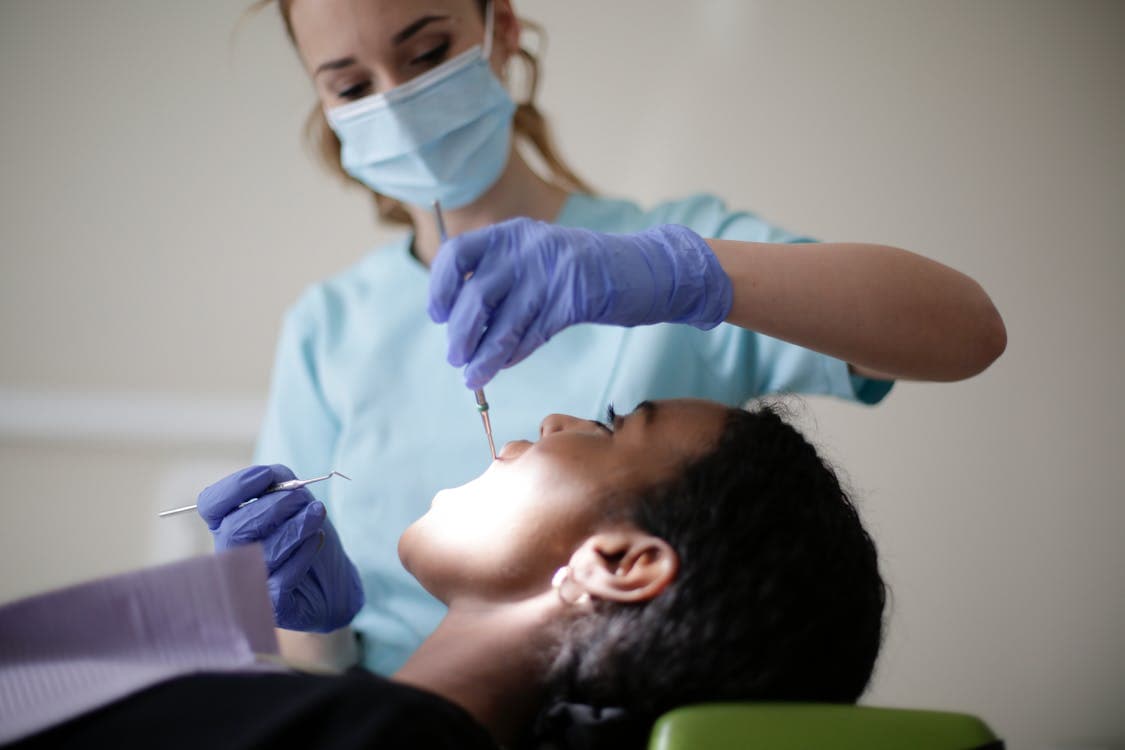
Not all patients feel a workforce shortage equally. Patients who have an established relationship with a practice — who have been coming in twice a year for years, whose records are complete, whose providers know their history — are somewhat insulated.
The patients most exposed are the ones who are new to the area and trying to establish care for the first time. Hays County’s growth is built on domestic migration. The majority of the county’s new residents each year have relocated from somewhere else, arriving without an established local provider in a market where wait times for new patients are already extended by staffing constraints.
For those patients — particularly the ones with complex dental histories or existing conditions that require ongoing management — the entry point into the local care system is slower and more difficult than it would be in a market with a more balanced supply of dental professionals.
The patients who navigate this most effectively tend to be the ones who start looking early and ask the right questions. They are direct about what they need — not just a cleaning, but a full evaluation by a provider who has worked extensively with cases like theirs — and they give themselves enough lead time to find it before their dental situation deteriorates further.
A Market That Is Catching Up, Slowly
The ACC Hays Campus dental hygiene program will help. Programs like it — and the workforce they produce — are what eventually closes the gap between a region’s population and its ability to serve it.
But dental hygiene programs take two to three years to complete. The graduates they produce will be entering a market that will be meaningfully larger still by the time they finish. The catch-up is real and it is happening, but it is slow by nature.
In the meantime, the practical reality for patients in Hays County who need specialized dental care is that the market does not make it easy. Finding the right provider — the one with the training, the technology, and the current capacity to handle a full-mouth evaluation — requires more active searching than it would in a market that had grown at a more measured pace.
The patients who approach the search with that reality in mind tend to find their way to good care. The ones who assume the market will surface the right option on its own tend to wait longer than their dental health should allow.