How Dark Sky Week and Palomar’s Night Rules Shape Landscape Lighting in San Diego County
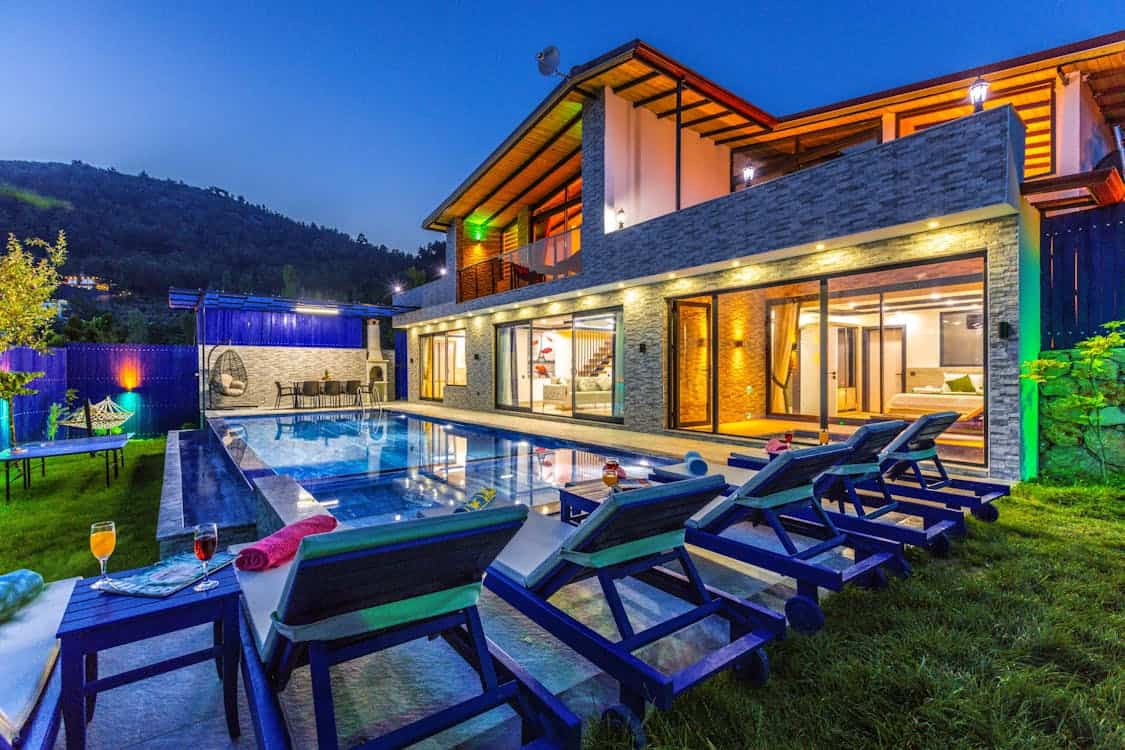
San Diego County has a relationship with the night sky that most metropolitan regions do not, and it shows up in the fine print of how residents are allowed to light their yards. That relationship gets its annual spotlight during International Dark Sky Week, set for April 13 to 20 in 2026, a week organized to draw attention to light pollution and responsible outdoor lighting.
The week is more than a celebration of stars. In this county it intersects with real local rules, shaped in part by the need to protect the Palomar and Mount Laguna observatories from the glow that washes out astronomical research. For homeowners designing landscape lighting, those rules are a genuine design input.
The good news is that the principles behind dark-sky lighting and the principles behind beautiful landscape lighting turn out to be nearly the same thing.
The Rules Behind the Night Sky
San Diego County’s light-pollution code exists to keep the night environment usable, for residents who value it and for the observatories whose work depends on it. The county is unusual in having world-class astronomy in its backyard, and that has produced some of the more thoughtful outdoor lighting regulation anywhere.
The core ideas are straightforward. Responsible outdoor lighting means using light only when and where it is needed, shielding fixtures so the light falls downward rather than spilling sideways or up, keeping light levels modest, and favoring warmer color temperatures over harsh blue-white tones.
Those principles are not arbitrary aesthetics. Upward and sideways light is what scatters into the sky and erases the stars, warmer light is gentler on wildlife and neighbors, and shielding keeps illumination on the target instead of trespassing onto adjacent property. Each rule traces back to a concrete effect.
The closer a property sits to the protected observatory zones, the stricter the expectations tend to be, but the underlying philosophy applies countywide. Light what you need, when you need it, and aim it where it belongs.
Why Good Design Already Follows These Rules
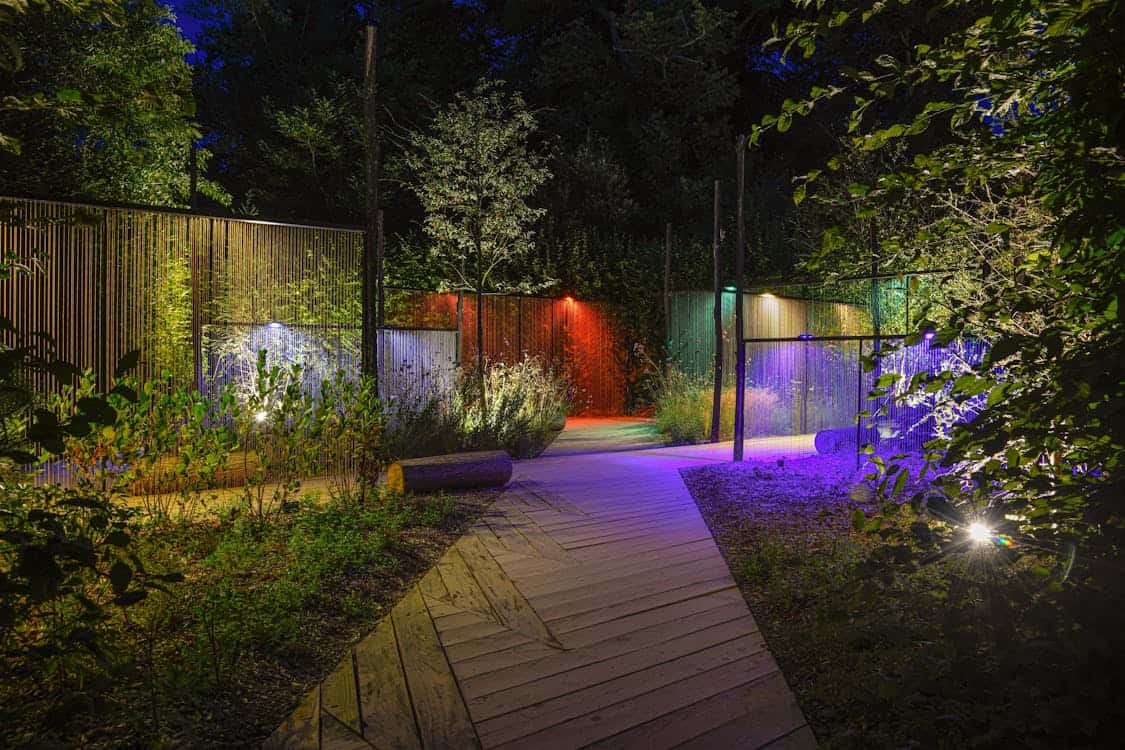
Here is the part that should reassure any homeowner worried that compliance means a dim, compromised yard. The techniques that satisfy dark-sky principles are, almost without exception, the techniques that make landscape lighting look sophisticated rather than cheap.
Consider shielding. A fully shielded fixture that casts light downward is exactly what a good designer uses to graze a wall, light a path, or wash a planting bed, because directed light creates depth, texture, and drama. Unshielded fixtures that throw light everywhere produce glare, which reads as harsh and amateurish.
Warm color temperature works the same way. Soft, warm light flatters stone, foliage, and architecture and creates the inviting evening atmosphere homeowners actually want, while cold blue-white light feels institutional. The dark-sky preference for warmth and the design preference for warmth are the same preference.
Restraint is the third overlap. Lighting only what needs lighting, key trees, paths, focal points, and seating areas, rather than flooding the entire yard, is both the responsible approach and the more elegant one. A few well-placed, well-aimed fixtures outperform a yard drowned in light every time.
Controls tie it together. Timers, dimmers, and scheduling let a system deliver light on demand and pull back when no one is outside, which serves the dark-sky goal of using light only when needed and the practical goal of a system that is cheap to run and easy to live with.
Designing With the Night in Mind
For a San Diego County homeowner, the framing should be that dark-sky compliance is not a limitation on a beautiful yard; it is a description of one. The constraints push toward exactly the choices a thoughtful lighting plan would make anyway.
The starting move is to decide what genuinely deserves light. A specimen tree worth uplighting, the paths that need safe footing, the steps, the seating area where people gather after dark, these are the targets. Everything else can stay dark, which both honors the rules and concentrates the drama where it counts.
From there, specify shielded fixtures, choose warm color temperatures, keep levels modest, and aim every fixture deliberately so the light lands on its target and not in a neighbor’s window or the sky. Add controls so the system runs on a schedule and dims when the yard is empty.
Because the strictest expectations cluster near the observatory zones and local rules can vary, a homeowner should confirm the specific requirements for their property and jurisdiction before finalizing a design, especially in the more rural and protected parts of the county. The principles are consistent; the precise thresholds are not.
International Dark Sky Week will come and go in April, but the logic it promotes is permanent in this county. A landscape lighting plan built on shielded, warm, restrained, well-controlled light satisfies the rules, protects the night sky that makes the region special, and, not incidentally, looks better than the over-lit alternative.
There is a security dimension that fits the same philosophy rather than fighting it. The instinct to flood a property with bright light for safety often backfires, since harsh glare creates deep shadows and blinds rather than reveals. Motion-activated, shielded fixtures that bring up light gradually when needed do the protective job better and align neatly with the dark-sky preference for light only when and where it is required.
For homeowners who care about the night sky itself, the payoff is personal as well as civic. A yard lit with restraint lets the stars stay visible from the patio, and in a county whose mountains still hold genuinely dark skies, that is a feature worth designing for. The same choices that protect Palomar’s view of the cosmos protect a homeowner’s own view of it from the back step.